Diagnosis and surgical removal of benign and malignant eyelid skin tumors with reconstruction — including basal cell, squamous cell, and melanoma.
Medically reviewed by EyePlastics Medical Editorial BoardASOPRS oculoplastic surgeonsLast updated June 2026
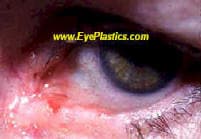
The eyelid is one of the most common sites for skin tumors on the body, both benign and malignant. Because the eyelid protects the eye, even small tumors in this location have functional and aesthetic significance. Oculoplastic surgeons evaluate, biopsy, remove, and reconstruct eyelid tumors as a single-surgeon team — a key advantage when Mohs surgery and oculoplastic reconstruction must be coordinated on the same day.
The first step with any new eyelid lesion is accurate diagnosis. Clinical features, growth rate, and patient history guide whether a lesion needs observation, office biopsy, or excision. When cancer is suspected, margin-controlled excision (Mohs micrographic surgery or frozen-section control) is standard of care before reconstruction.
Malignant eyelid tumors are predominantly epithelial in origin. The eyelid receives intense cumulative UV exposure — particularly the lower lid and medial canthus — and harbors both sebaceous glands and melanocytes, giving rise to a broad range of malignancies. The four most clinically important are basal cell carcinoma (most common), sebaceous carcinoma, squamous cell carcinoma, and melanoma.
General principles of management:
Red flags for malignancy: loss of lashes (madarosis), induration or firmness beyond the visible lesion, irregular or pearly border, telangiectatic vessels, ulceration, recurrence after treatment, or any lesion that bleeds spontaneously.
Eyelid growths range from harmless benign lesions to skin cancers that need prompt treatment. Explore each below — and remember that any new, growing, bleeding, or lash-destroying lesion should be evaluated.
Most eyelid bumps are harmless — a stye, a chalazion, a skin tag, or a xanthelasma. But certain features suggest a skin cancer and warrant prompt evaluation and biopsy:
Benign growths — papillomas, cysts, syringomas, and other benign lesions — are common and usually removed for comfort or appearance; removed tissue is routinely sent for pathologic examination to confirm the lesion is truly benign. Malignant eyelid tumors, in rough order of frequency, are:
Diagnosis begins with a biopsy. Confirmed eyelid cancers are usually excised with margin control — often Mohs micrographic surgery, which removes the tumor layer by layer while checking margins under the microscope, sparing as much healthy lid as possible. Because the eyelid protects the eye, reconstruction by an oculoplastic surgeon is as important as the cancer removal: the repair must restore a smooth lid margin, a stable tear film, and full closure to keep the eye safe.
Lifelong sun protection — sunglasses and sunscreen — lowers risk, and any suspicious or non-healing lid lesion should be checked early. Eyelid tumor removal and reconstruction are best handled by an ASOPRS fellowship-trained oculoplastic surgeon, who can both clear the cancer and rebuild the lid. Find one in our surgeon directory.
Related in-depth guides
Connect with a board-certified oculoplastic surgeon who specializes in skin tumors.
Search the Directory →