The most common orbital and eyelid tumor of childhood — a benign 'strawberry' vascular birthmark that usually fades on its own but can threaten vision when it blocks or presses on the eye.
Medically reviewed by EyePlastics Medical Editorial BoardASOPRS oculoplastic surgeonsLast updated June 2026
Part of our complete guide to Orbital Tumors — this page covers capillary hemangioma in depth.
A capillary hemangioma (also called an infantile or “strawberry” hemangioma) is a benign tumor of rapidly growing blood-vessel cells — and the most common orbital and periorbital tumor of childhood. It appears in the first weeks of life as a raised, red or bluish, spongy lesion; about 60% occur on the head and neck. The upper eyelid is involved more often than the lower, and lesions deep in the orbit can push the eye forward (proptosis). It is more common in girls and in low-birth-weight infants.
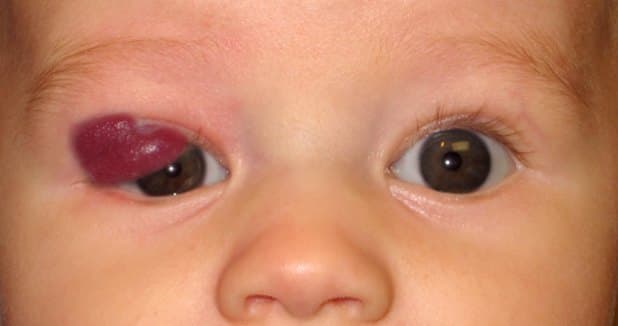
The pattern is predictable: rapid growth for roughly the first 6–12 months (the lesion may darken and swell with crying), then a plateau, then slow spontaneous shrinkage (involution) beginning around age one. About 60% have resolved by age 5 and 90–95% by age 9. Because most disappear on their own, many hemangiomas are simply observed — unless vision is at risk.
An infant’s visual system is still wiring itself to the brain; anything that degrades the image in one eye can cause amblyopia (permanent “lazy eye”). An eyelid or orbital hemangioma can do this three ways:
Every periocular hemangioma therefore needs ophthalmic monitoring during the growth phase, even when no treatment is planned. Multiple lesions occasionally warrant systemic evaluation (rarely, visceral involvement or Kasabach–Merritt syndrome).
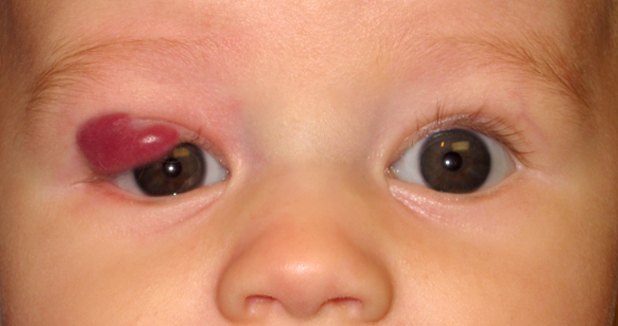
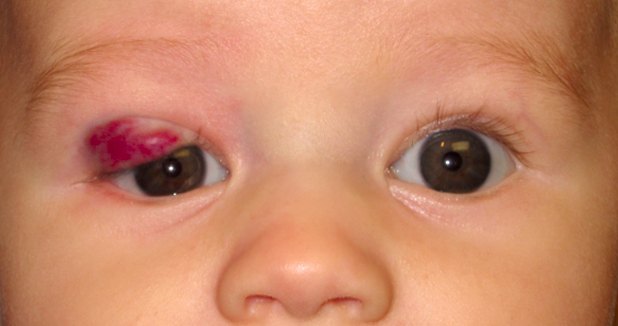
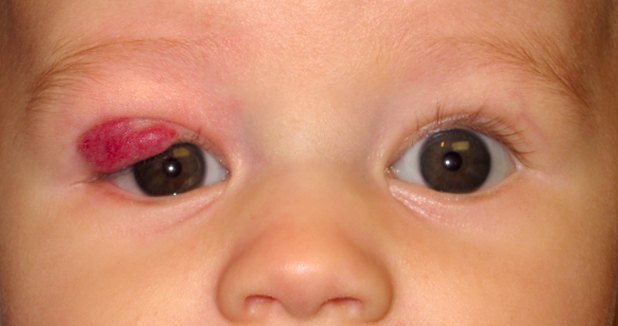
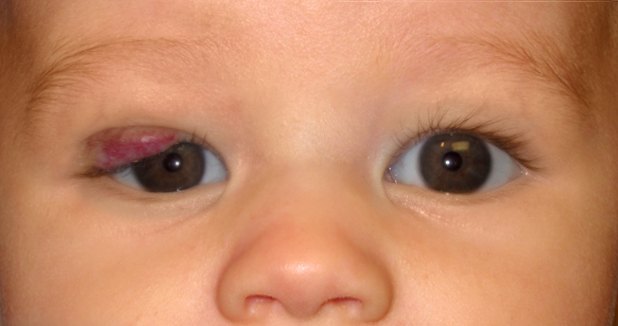
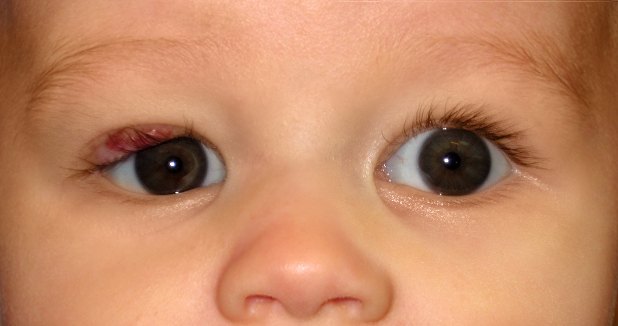
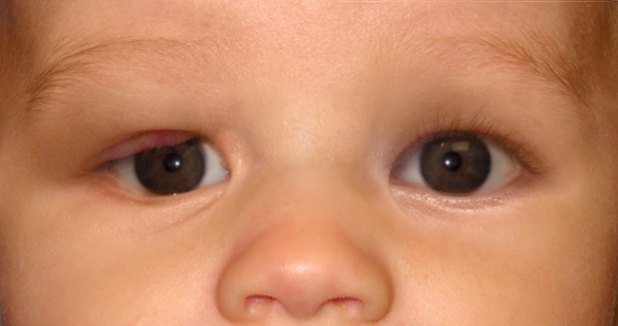
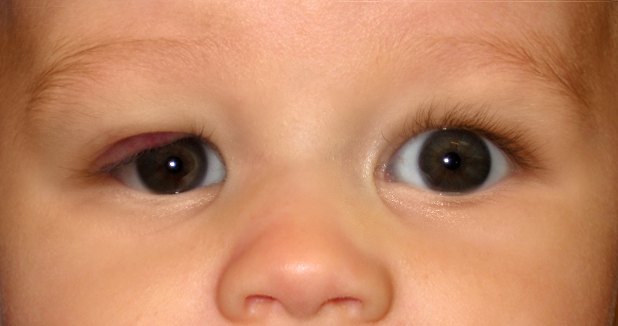
The photographs below follow a single eyelid hemangioma treated with topical timolol over 14 months:
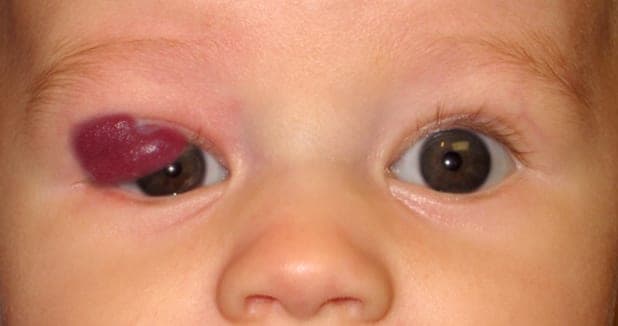
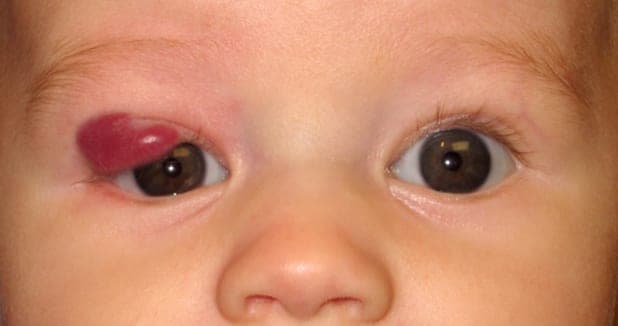
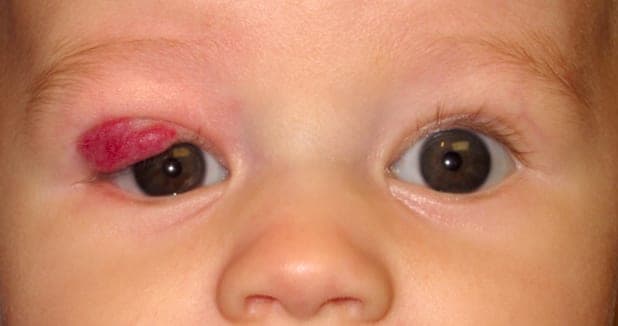
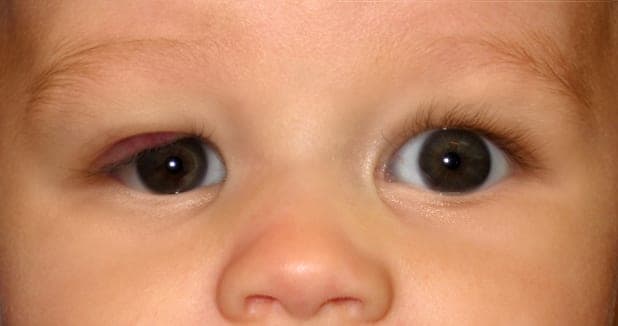
Drag the control to follow one infant's capillary hemangioma shrinking over 14 months of topical timolol.
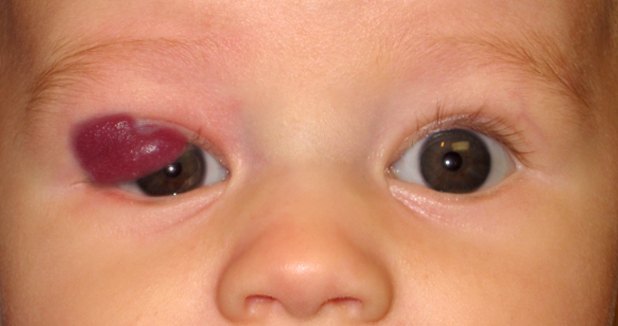
Drag the slider to follow one infant's capillary hemangioma over 14 months of topical timolol — before treatment, then 1, 2, 4, 6, 9, 12, and 14 months.
Management is shared between the pediatrician, a pediatric ophthalmologist, and an oculoplastic surgeon — the surgeon’s role is monitoring orbital involvement and operating when the lesion or its remnant requires excision.
Adult with a similar diagnosis on a scan? The cavernous hemangioma is a different condition despite the similar name — an adult orbital lesion that does not fade on its own. See our comparison of the two.
Capillary hemangioma is also covered in our guide to congenital eyelid and orbital conditions.
Connect with a board-certified oculoplastic surgeon who specializes in capillary hemangioma.
Search the Directory →