A rare but aggressive eyelid cancer that masquerades as a chalazion or chronic blepharitis — why a persistent lesion needs a biopsy.
Medically reviewed by EyePlastics Medical Editorial BoardASOPRS oculoplastic surgeonsLast updated June 2026
Part of our complete guide to Eyelid Skin Tumors — this page covers sebaceous gland carcinoma in depth.
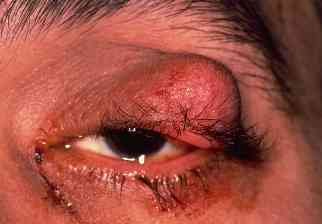
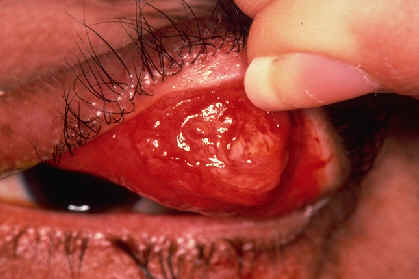
Sebaceous gland carcinoma (SGC) is the third most common eyelid malignancy in Western populations and the second most common in Asian populations. It arises from meibomian glands (tarsal plate), glands of Zeis (lash follicles), or sebaceous glands of the caruncle. The upper eyelid is involved twice as often as the lower eyelid — reflecting the greater number and size of meibomian glands in the upper tarsus.
SGC is notorious for masquerading as benign conditions. The most common mimics are:
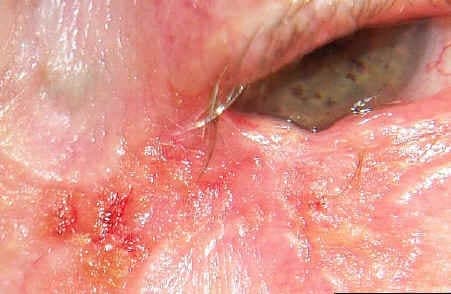
A key feature distinguishing SGC from BCC is its ability to spread intraepithelially (pagetoid spread) throughout the conjunctival epithelium and skin without forming a discrete mass, making clinical margins unreliable. This also explains why it can present as chronic, diffuse eyelid erythema with madarosis (lash loss) — a presentation easily attributed to blepharitis for months or years.
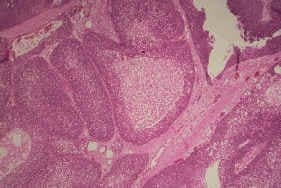
Diagnosis: Full-thickness eyelid biopsy (including conjunctiva) and map biopsies of the conjunctiva to assess the extent of pagetoid spread. Immunohistochemistry (EMA, adipophilin, androgen receptor) confirms sebaceous differentiation. SGC is associated with Muir-Torre syndrome (mismatch-repair gene mutations, most commonly MSH2, also MLH1/MSH6) — microsatellite instability testing and oncology referral are appropriate, especially in patients under 60.
Treatment: Wide local excision with margin control; note that frozen section is unreliable for detecting pagetoid conjunctival spread, so permanent-section control or staged excision with conjunctival map biopsies is preferred for intraepithelial disease. Sentinel lymph node biopsy may be considered in selected higher-risk cases, though its survival benefit remains unproven. Exenteration may be required for orbital invasion or extensive pagetoid spread. Adjuvant radiation is used for positive margins or regional nodal disease. The 5-year disease-specific mortality is ~10–20%.
Connect with a board-certified oculoplastic surgeon who specializes in sebaceous gland carcinoma.
Search the Directory →