Diagnosis and treatment of eyelid margin inflammation — anterior and posterior blepharitis, meibomian gland dysfunction, and Demodex infestations.
Medically reviewed by EyePlastics Medical Editorial BoardASOPRS oculoplastic surgeonsLast updated June 2026
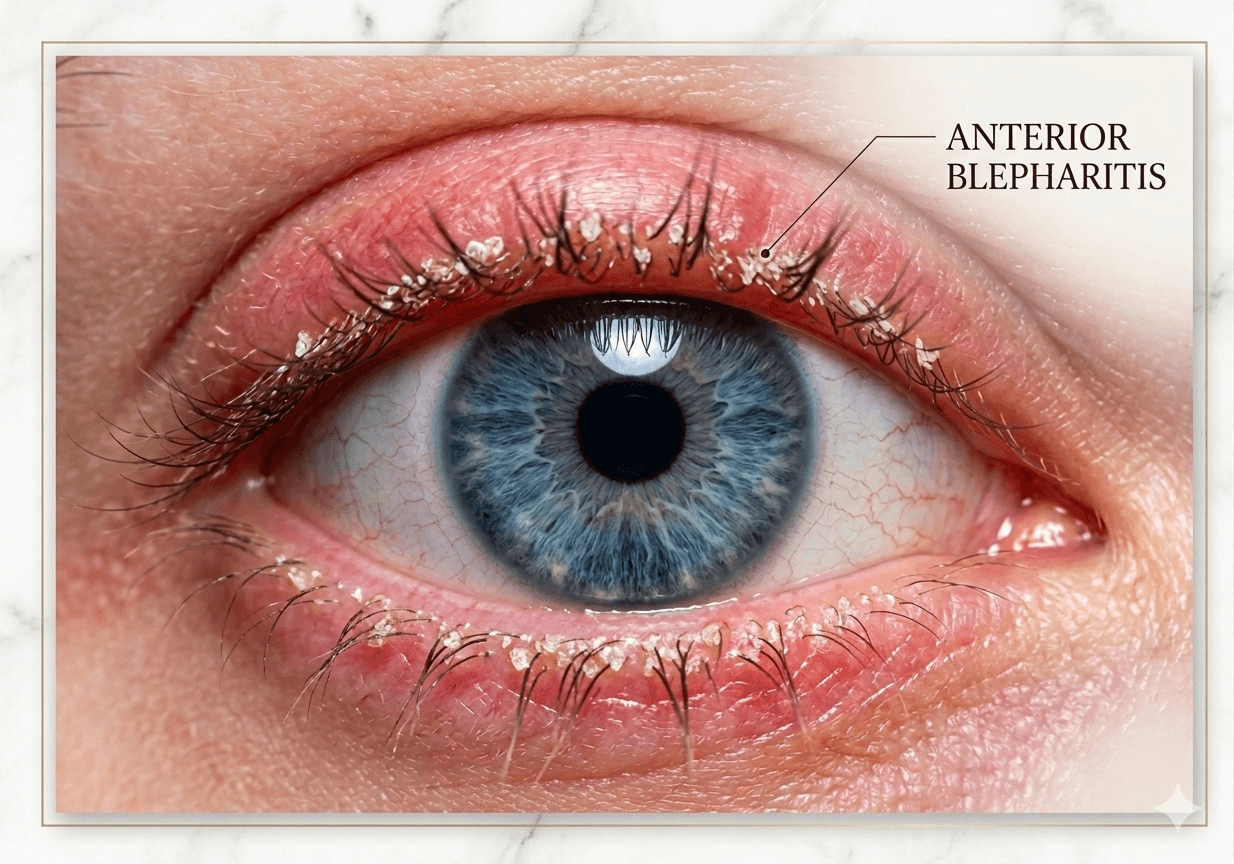
Blepharitis is a chronic inflammation of the eyelid margins. It is one of the most common eyelid conditions seen by eye physicians and oculoplastic surgeons, affecting patients of all ages. Although rarely vision-threatening in its early stages, untreated blepharitis causes progressive discomfort, contributes to dry eye disease, and can lead to corneal damage and eyelid structural changes over time.
Blepharitis and Dry Eye Disease are closely linked — each worsens the other. Treating meibomian gland dysfunction (posterior blepharitis) is central to managing both. Ocular rosacea is a related condition covered on the Rosacea page.
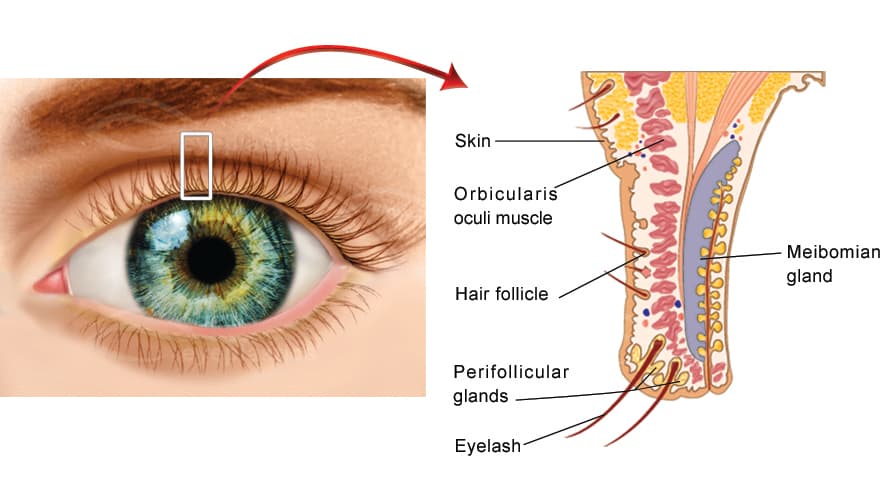
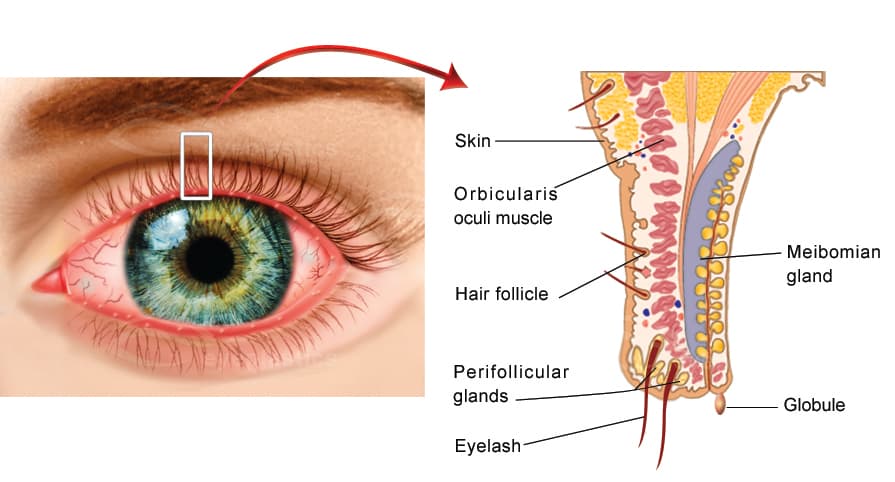
Blepharitis is classified by anatomical location and underlying cause:
Anterior Blepharitis
Affects the front of the eyelid margin where the eyelashes are attached.
Posterior Blepharitis
Affects the meibomian gland orifices along the posterior eyelid margin.
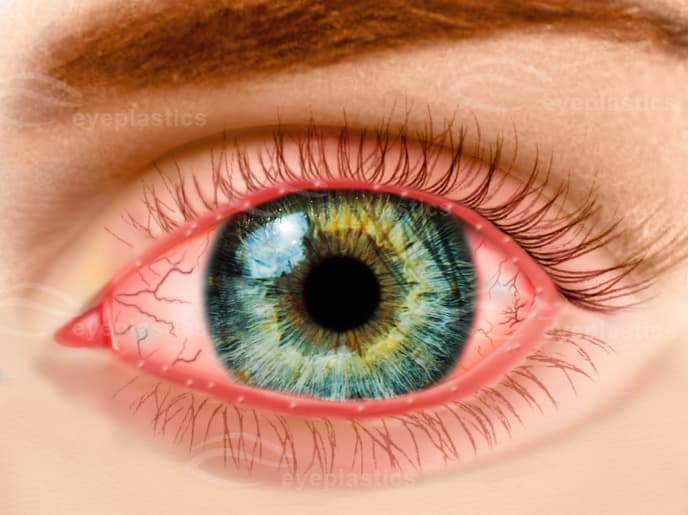
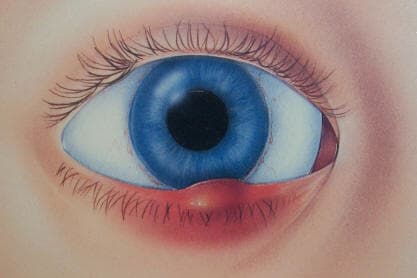
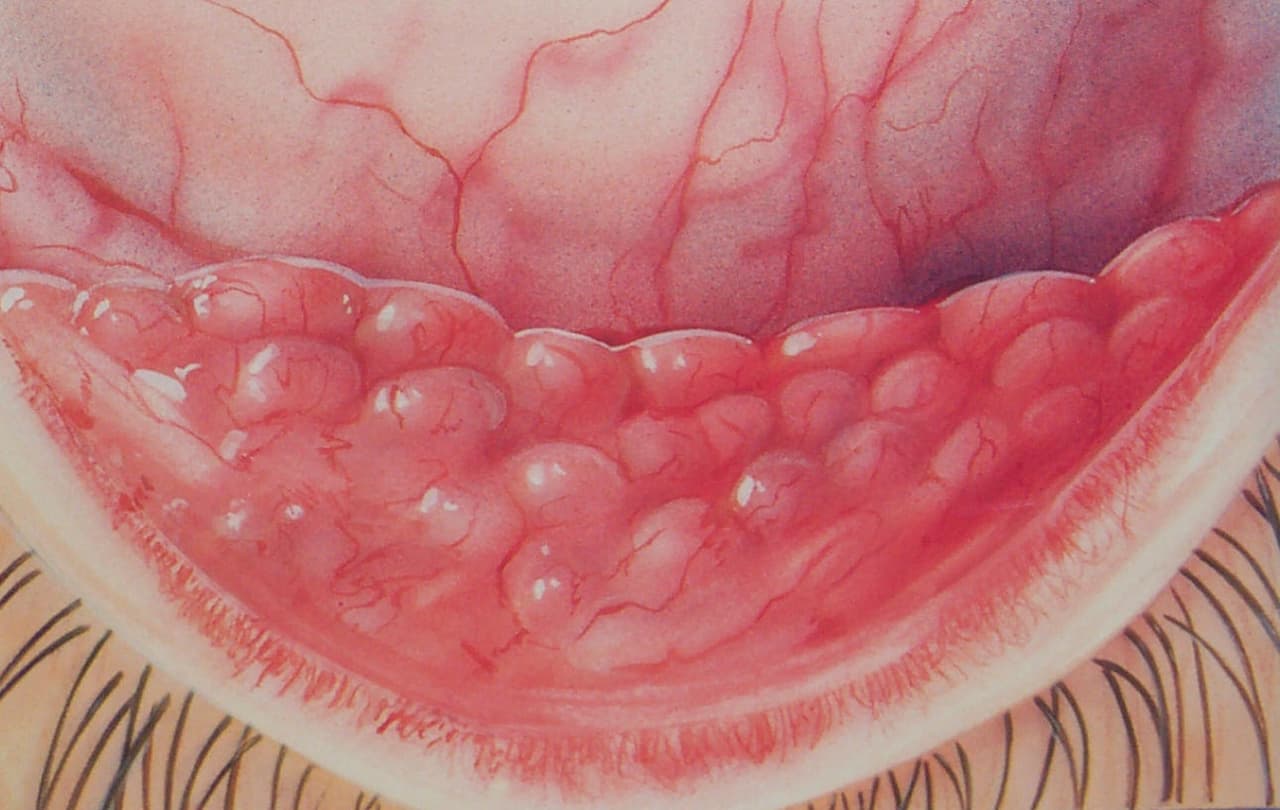
Slit lamp examination reveals distinct features depending on type:
Meibography (infrared imaging) reveals gland dropout in chronic MGD — a sign of glandular atrophy that is generally irreversible in advanced disease.
Blepharitis is a chronic condition requiring long-term management. No single treatment is curative, but consistent hygiene and appropriate therapy significantly reduce inflammation and symptoms.
The cornerstone of blepharitis management. Removes debris, unclogs meibomian orifices, and reduces bacterial load:
For Demodex blepharitis, eyelid tea tree oil (terpinen-4-ol) scrubs or weekly in-office treatments are effective. XDEMVY (lotilaner ophthalmic solution 0.25%) — FDA-approved specifically for Demodex blepharitis — is applied twice daily for 6 weeks and has demonstrated significant reduction in mite counts and collarettes in clinical trials.
→ Read the full guide: Demodex Blepharitis — collarettes, causes & treatment, including how it overlaps with MGD, dry eye, and rosacea.
Blepharitis is usually a chronic condition managed rather than cured, and consistent lid hygiene is the foundation of every treatment plan:
See an eye doctor if you have persistent redness, pain, light sensitivity, blurred vision, eyelash loss, or a recurring lump — these can signal complications or, rarely, a masquerading tumor. Blepharitis also drives and worsens dry eye and can trigger a chalazion.
When hygiene alone is not enough, treatment is tailored to the type: topical or short-course antibiotics, low-dose oral doxycycline for posterior blepharitis and ocular rosacea, in-office procedures for Demodex, and IPL or gland-expression for meibomian dysfunction. Realistic expectations matter: the goal is control and comfort, not a one-time cure.
Connect with a board-certified oculoplastic surgeon who specializes in blepharitis.
Search the Directory →