An autologous dermis-and-fat graft used for socket reconstruction and volume restoration — particularly valuable in children, where it can grow and stimulate orbital development.
Medically reviewed by EyePlastics Medical Editorial BoardASOPRS oculoplastic surgeonsLast updated June 2026
Part of our complete guide to Anophthalmos & Socket Reconstruction — this page covers the dermis-fat graft in depth.
A dermis-fat graft uses a disc of the patient’s own dermis and subcutaneous fat, typically harvested from the lower abdomen or the outer quadrant of the buttock. Because it is autologous, it avoids the rejection and disease-transmission risks associated with donor or synthetic materials, though graft viability and resorption remain considerations. Uniquely, the graft can grow in children, providing ongoing stimulus for orbital development — a significant advantage over fixed-size implants in early childhood.
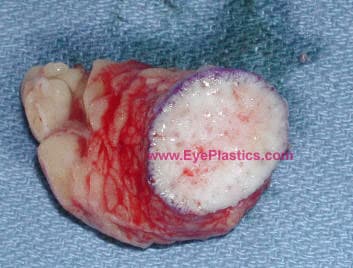
The graft is measured approximately 25 mm in diameter; the dermis is often shaped into a dome to improve prosthesis motility. The fat provides volume while the dermal surface becomes lined by conjunctiva over time. Potential complications include fat atrophy (which makes final volume somewhat unpredictable), central graft ulceration or necrosis, cyst or granuloma formation, hair growth from the dermal surface, graft over-growth (hypertrophy, especially in children), and donor-site morbidity. When it succeeds, a dermis-fat graft provides a stable, vascularized socket surface that tolerates a prosthesis well.
Connect with a board-certified oculoplastic surgeon who specializes in dermis-fat graft.
Search the Directory →