Abnormally lax, rubbery upper eyelids that evert during sleep, causing chronic one-sided eye irritation — and a frequent clue to undiagnosed obstructive sleep apnea.
Medically reviewed by EyePlastics Medical Editorial BoardASOPRS oculoplastic surgeonsLast updated June 2026
Part of our complete guide to Blepharitis — this page covers floppy eyelid syndrome in depth.
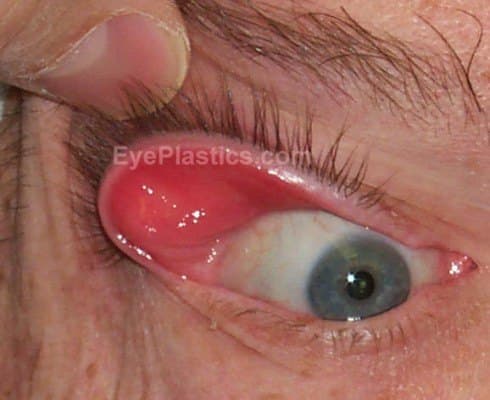
Floppy eyelid syndrome (FES) is a condition in which the upper eyelids become abnormally soft, rubbery, and lax — so lax that they evert (turn inside-out) with only the gentlest pull, and often flip open on their own during sleep. The exposed inner lining of the eyelid rubs against the pillow night after night, producing a chronic, stubborn irritation of the eye that is frequently mistaken for ordinary conjunctivitis or dry eye.
Why it matters beyond the eye. Floppy eyelid syndrome is strongly associated with obstructive sleep apnea (OSA) and obesity. For many patients the eye findings are the first clue to undiagnosed sleep apnea — so recognizing FES can prompt a diagnosis that has major effects on overall health. Keratoconus is also more common in these patients.
The eyelid tarsus in FES shows a loss of elastin (linked to increased matrix metalloproteinase activity), leaving the lid floppy and easily deformed. Two mechanisms then drive the symptoms: spontaneous eyelid eversion during sleep, and repetitive mechanical rubbing of the everted lid against bedding.
Patients typically describe a red, irritated, watery eye that is worst on waking and never fully settles despite repeated drops. The signs at the slit lamp are characteristic once they are looked for.
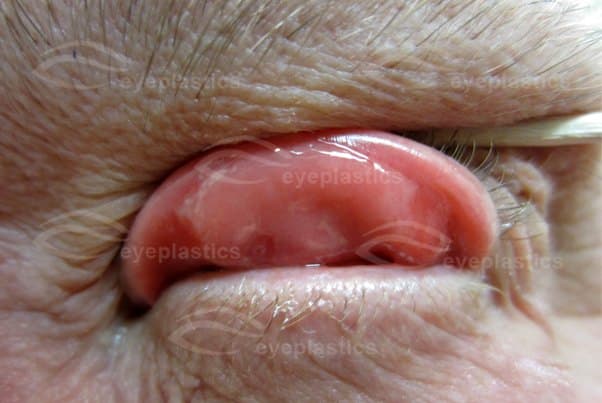
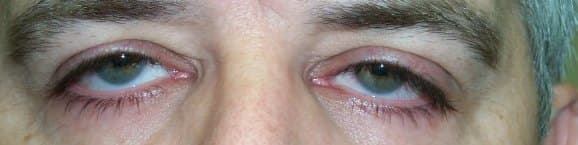
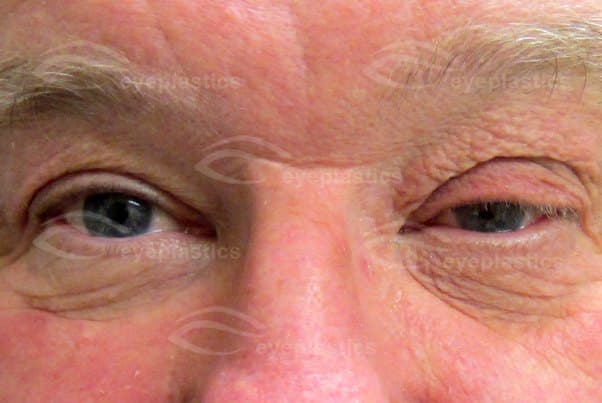
FES is a clinical diagnosis that hinges on a high index of suspicion. Any patient with a chronic, one-sided, treatment-resistant red eye — especially an overweight, middle-aged man — should have the upper lid tested for easy eversion. Because of the strong link with sleep apnea, a key part of the work-up is screening for OSA and referral for a sleep study when indicated.
Treatment has two goals: protect the eye at night, and address the underlying laxity and any systemic sleep apnea.
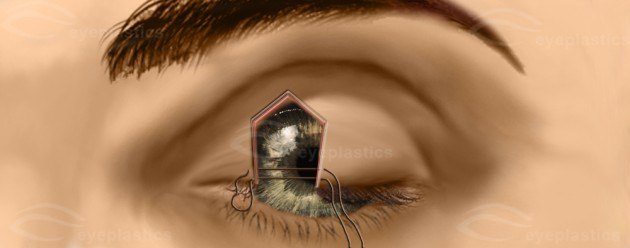
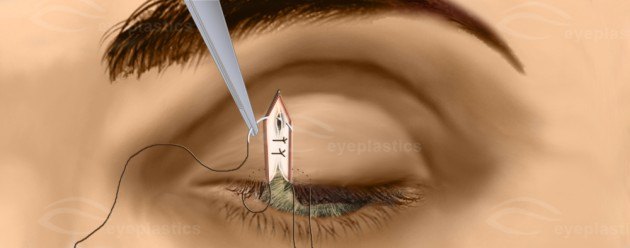
The series below shows the repair step by step — a pentagonal wedge of the lax lid is removed and the lid is tightened:
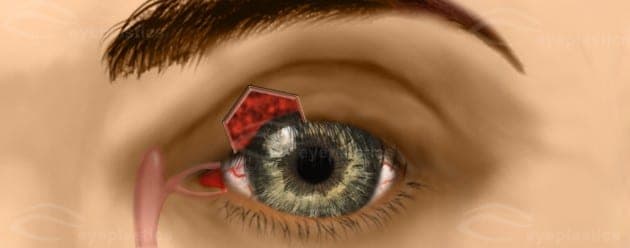
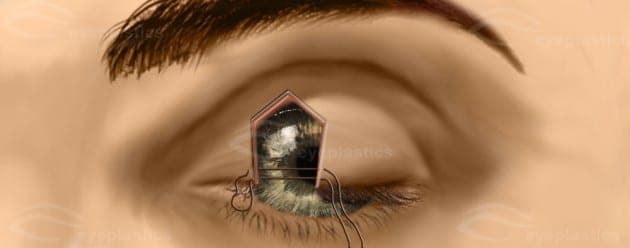
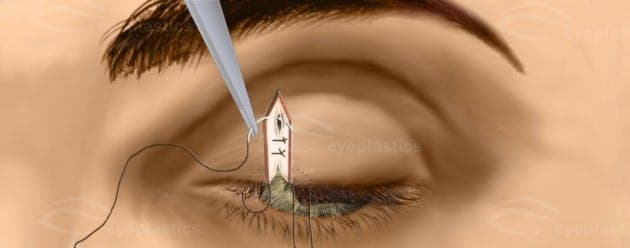

When symptoms persist, the definitive treatment is horizontal eyelid tightening — a full-thickness eyelid-shortening or lateral tarsal-strip procedure that restores normal lid tension so the lid no longer everts. Associated ptosis or lash ptosis can be addressed at the same time. Results are generally durable, though recurrence can occur, particularly if associated obesity and untreated sleep apnea persist.
Drag the slider to step through the surgical correction.
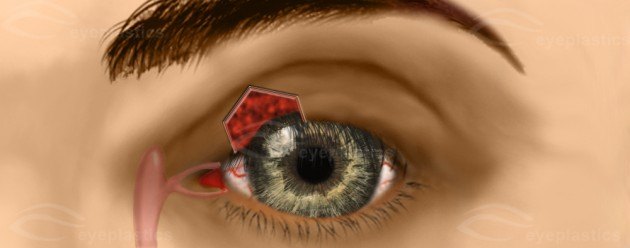
Step 1 of 4
The pentagonal wedge of lax upper eyelid to be removed is marked
Drag the slider to step through the surgical correction (pentagonal wedge resection).
Floppy eyelid syndrome sits within the broader spectrum of eyelid laxity conditions, and the surgical tightening overlaps with techniques used for ectropion and entropion. Stretching of the eyelid can also cause ptosis.
Connect with a board-certified oculoplastic surgeon who specializes in floppy eyelid syndrome.
Search the Directory →