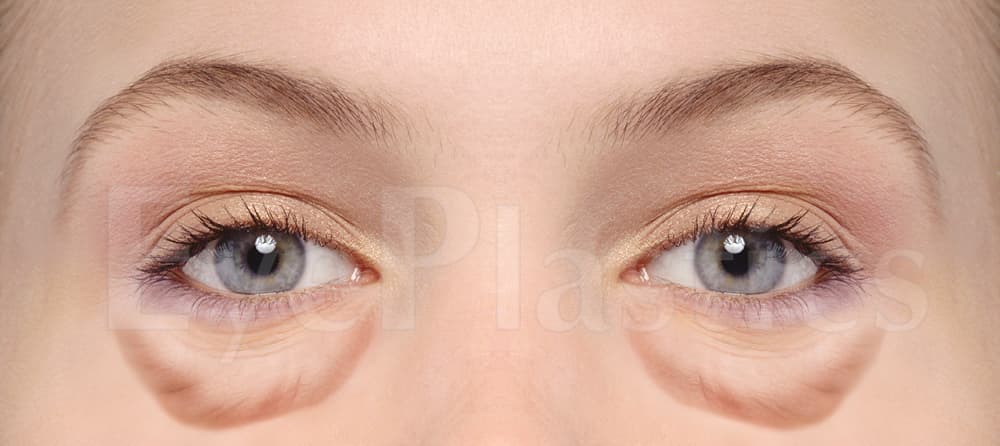
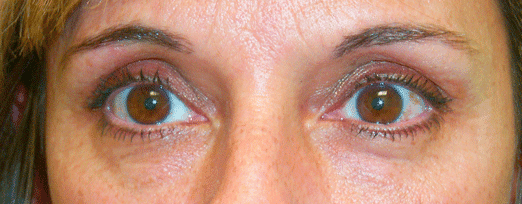
Lower eyelid blepharoplasty (lower eyelid surgery, often called “eye-bag” surgery) reduces the puffy bags and crepey skin of the lower lid that result from orbital fat pushing forward as the supporting tissues and skin lose their elasticity. It is most often performed for cosmetic rejuvenation, though it also has functional and reconstructive applications, restoring a smoother, less tired lower-lid contour.
Surgical Approaches
Two routes are used, chosen according to how much skin excess is present:
Transconjunctival (internal): The incision is made on the inner conjunctival surface, avoiding an external skin incision and therefore no visible cutaneous scar. It is preferred when fat removal or repositioning is the main goal and skin excess is minimal.
Transcutaneous (external): The incision is placed just beneath the lash line, allowing simultaneous removal of excess skin. It demands precise, tension-free closure to avoid pulling the lid down or outward (ectropion).
Fat Repositioning & the Tear Trough
Rather than simply removing orbital fat, modern technique often repositions it — draping it over the orbital rim to fill the hollow of the tear trough. This produces a smoother lid-cheek junction and a more natural, less hollowed result than excision alone. Lower blepharoplasty can be combined with fat repositioning or transfer to restore lost volume — see Fat Transfer & Repositioning.
Are You a Candidate?
Lower eyelid surgery suits people bothered by:
Persistent under-eye bags or puffiness that read as “tired”
Crepey, wrinkled lower-lid skin
A hollow tear-trough groove between the lid and cheek
Festoons or malar mounds (assessed individually — these can need a different approach)
Because the lower lid is delicate, candidacy hinges on lid tone: pre-existing laxity raises the risk of the lid pulling down after surgery, so a snap-back/distraction test is part of the evaluation and a tightening step (canthopexy or, for greater laxity, canthoplasty) may be planned. Pre-existing dry eye is also assessed beforehand.
Before & After
Lower Blepharoplasty Before & After
1 / 6
Drag the divider left or right to compare. Select a case in the strip below.
BeforeAfter
Age 44Patients are from a national database. Individual results may vary.
Recovery & Risks
Swelling and bruising of the lower lid and cheek are expected for 1–2 weeks. The most important specific risk is lower-lid malposition (retraction or ectropion), which is why tension-free technique and careful patient selection matter; pre-existing lid laxity may call for a tightening procedure (canthopexy) at the same time. Temporary dry eye and chemosis (conjunctival swelling) can also occur. Very rarely, bleeding behind the eye (retrobulbar hemorrhage) can threaten vision and requires urgent evaluation if you develop sudden severe pain, bulging, or loss of vision. For the full timeline, see Blepharoplasty Recovery.
First 2–3 days: lid and cheek swelling/bruising peak — cold compresses, head elevation.
Week 1: any skin sutures removed; bruising fades.
Weeks 2–3: most swelling settles; makeup can cover residual marks.
Months 1–3: the final lid-cheek contour emerges as deep swelling fully resolves.
Lower blepharoplasty is the surgical option in our complete guide to under-eye bags.
Frequently Asked Questions
Is lower blepharoplasty covered by insurance?
Lower eyelid blepharoplasty is performed for cosmetic reasons in nearly all cases and is therefore not covered by insurance.
What is the difference between the transconjunctival and transcutaneous approaches?
Transconjunctival surgery is done through the inner surface of the lid with no external scar, preferred when fat is the main issue. The transcutaneous approach uses an incision just below the lashes to also remove excess skin.
What is fat repositioning?
Instead of simply removing orbital fat, it is draped over the orbital rim to fill the tear-trough hollow — producing a smoother lid-cheek junction and a more natural result than excision alone.
What is the main risk specific to lower blepharoplasty?
Lower-lid malposition (retraction or ectropion). Tension-free technique and careful patient selection minimize it; pre-existing lid laxity may warrant a tightening procedure at the same time.
Will lower blepharoplasty get rid of my dark circles?
Partly. Dark circles caused by the shadow of under-eye bags or a tear-trough hollow improve when those are corrected. Circles from skin pigmentation or thin skin showing underlying vessels are treated differently (resurfacing, fillers, or topical therapy).
Will there be a visible scar?
Usually not. The transconjunctival approach (inside the lid) leaves no external scar; the transcutaneous approach hides the incision just under the lash line, where it typically heals to a nearly invisible line.
Find a Specialist
Connect with a board-certified oculoplastic surgeon who specializes in lower eyelid blepharoplasty.