- Home
- Services
- Lacrimal System
- Blocked Tear Duct & DCR Surgery
Blocked Tear Duct & DCR Surgery
Acquired nasolacrimal duct obstruction and its surgical treatment β dacryocystorhinostomy (DCR), probing, and silicone intubation.
Explore lacrimal anatomy and surgical treatments including probing, silicone intubation, DCR, and CDCR using the menu on the left.
Lacrimal System β Interactive Surgical Animation

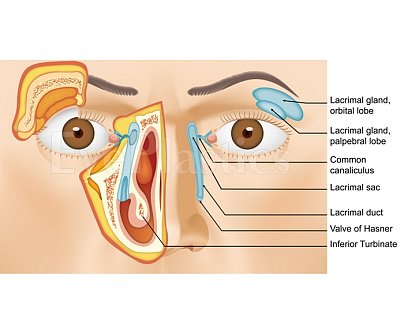
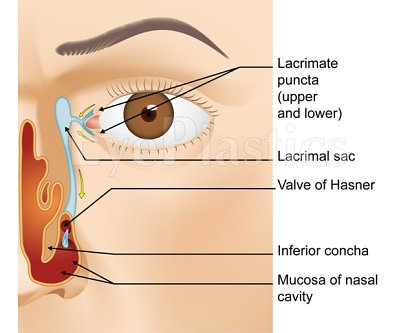
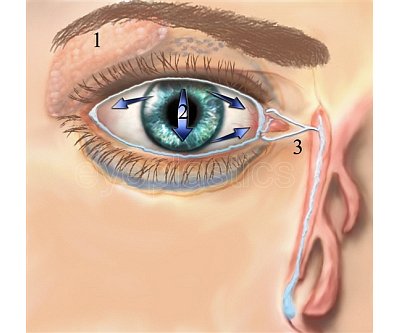
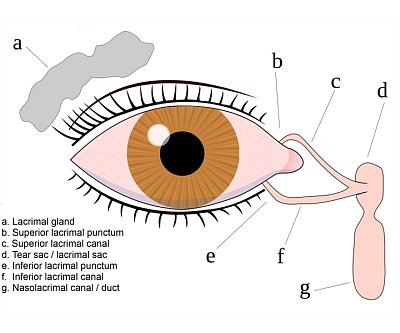
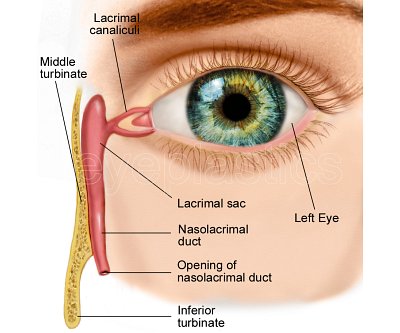
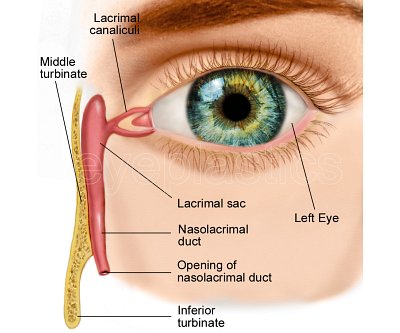
When tears cannot drain, they overflow onto the cheek and the tear sac can become a reservoir for infection. A blocked nasolacrimal duct is the most common cause, and the definitive fix is surgery to restore drainage. The animation below walks through probing, intubation, and dacryocystorhinostomy (DCR).
Acquired Nasolacrimal Duct Obstruction
Acquired NLDO is divided into primary (PANDO — idiopathic, inflammatory/fibrotic) and secondary (SALDO — a specific identifiable cause).
Primary PANDO
PANDO is the most common acquired NLDO in adults, predominantly affecting middle-aged to elderly women. Progressive fibrosis and epithelial loss narrow the nasolacrimal canal, likely related to reduced estrogen levels affecting the nasolacrimal mucosa (analogous to osteoporosis). The bony canal dimensions are measurably smaller in affected women.
Secondary SALDO — Causes
- Infectious: Actinomyces, Propionibacterium (cause dacryoliths/stones), herpes simplex virus (canalicular scarring), fungal (Aspergillus, Candida)
- Inflammatory: Wegener’s granulomatosis, sarcoidosis, cicatricial pemphigoid, inflammatory bowel disease
- Neoplastic: lacrimal sac tumors (usually present with bloody epiphora), nasal or sinus tumors extending to the duct
- Traumatic / iatrogenic: nasal surgery, overly aggressive probing, facial fractures, orbital decompression surgery
- Medications: topical anti-glaucoma drops (especially epinephrine and idoxuridine), systemic docetaxel or 5-FU chemotherapy causing canalicular fibrosis
- Mechanical: dacryoliths (calcified concretions), rhinoliths, mucoceles compressing the duct from outside
Surgical Treatment
The goal of lacrimal surgery is to restore or create a functional tear drainage pathway from the lacrimal sac into the nasal cavity. The approach depends on the site and extent of obstruction, prior surgery, and nasal anatomy.
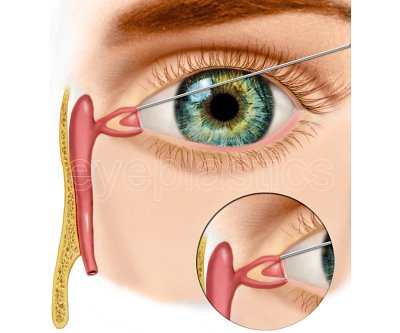
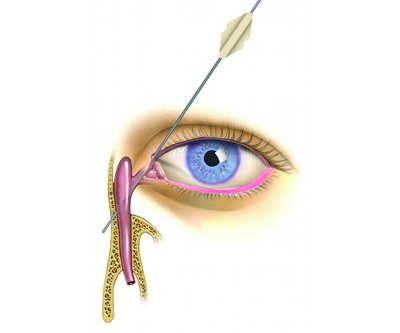
1. Probing & Irrigation
- First-line for congenital NLDO after failed conservative management
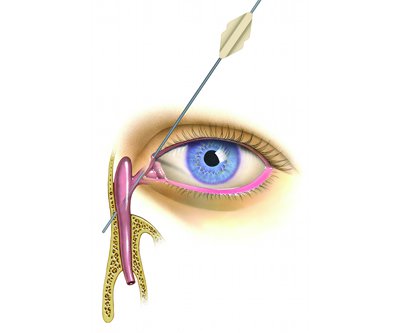
- Lacrimal probe passed through punctum into the nasolacrimal duct under topical or general anesthesia
- Success rate: ≈ 90% in infants under 12 months; declines with age
- Often combined with silicone intubation to prevent re-stenosis
2. Balloon Dacryoplasty
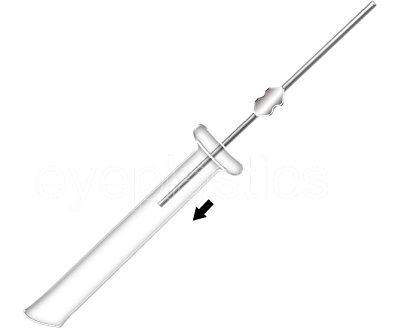
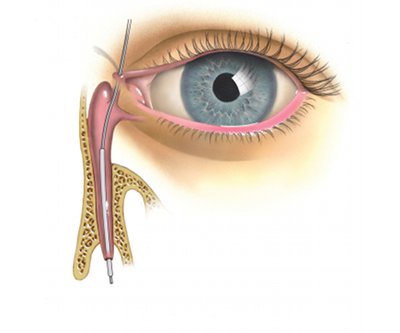
- Deflated balloon catheter (LacriCATH®) inserted into the nasolacrimal duct; inflated at 75 PSI for 90 seconds at two positions within the duct
- Alternative to intubation for refractory congenital NLDO and some adult cases of functional stenosis
- Minimal scarring; performed under general anesthesia
3. Endoscopic DCR (Dacryocystorhinostomy)
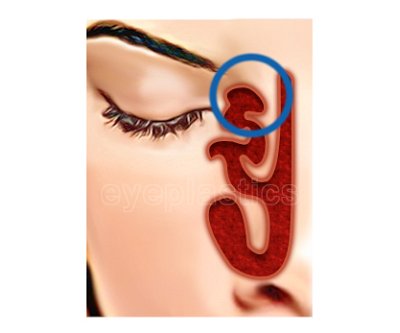
Endoscopic DCR is the preferred approach for acquired NLDO in adults, chronic dacryocystitis, and failed probing with intubation in children. A new bony window is created between the lacrimal sac and the nasal cavity under direct endoscopic visualization, bypassing the blocked nasolacrimal duct entirely.
Step-by-Step Procedure
- Anesthesia: General anesthesia (standard) or local anesthesia with IV sedation. Topical vasoconstrictors applied intranasally
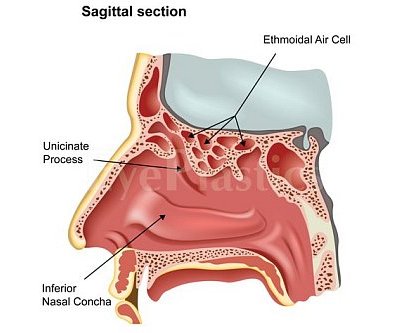
- Nasal access: Endoscope introduced through the nostril; middle turbinate reflected to expose the lateral nasal wall adjacent to the lacrimal bone
- Lacrimal sac identification: Fine probe passed through the punctum transilluminates the sac through the nasal mucosa for precise localization
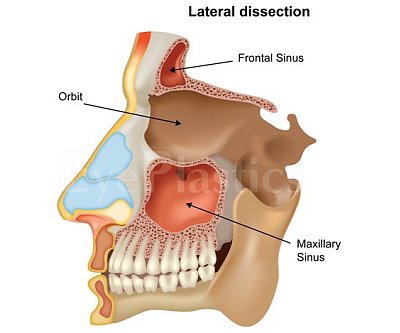
- Bony ostium creation: Nasal mucosa elevated; lacrimal bone and anterior maxilla removed with powered instrumentation (microdebrider and Kerrison rongeur) to create a 10–12 mm bony opening into the lacrimal sac
- Mucosal flap: Nasal mucosa fashioned into flaps to line the new anastomosis and promote primary healing
- Sac marsupialization: Lacrimal sac opened and apposed to nasal mucosa to create a wide, epithelialized rhinostomy
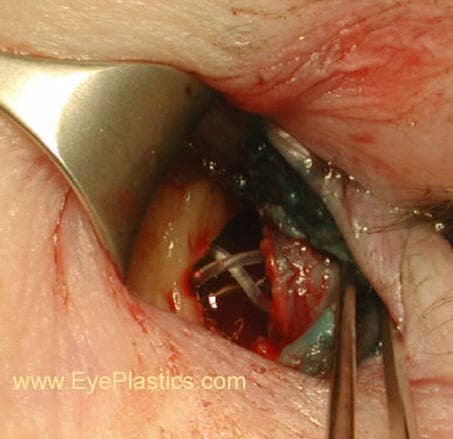
- Silicone stent: Bicanalicular silicone tube threaded from each punctum through the rhinostomy and retrieved nasally; removed in clinic at approximately 3 months
- Closure: Absorbable nasal packing; no skin incision; no external scar
Recovery
- Same-day outpatient procedure; home the same day
- Oral antibiotics, antibiotic eye drops, and nasal saline sprays for 2 weeks
- Avoid nose blowing for 2 weeks; expect mild bloody nasal discharge for several days
- Success rate: 85–95% resolution of tearing
4. External DCR
- Incision at the medial canthus; direct access to the lacrimal sac and nasolacrimal duct
- Preferred when intranasal anatomy (tumors, severe deviation, prior sinus surgery) prevents an endoscopic approach, or when lacrimal sac biopsy is needed for suspected tumor
- Success rate comparable to endoscopic DCR; small external scar hides in the nasofacial groove and is rarely noticeable
- Silicone stent placed and removed at 3 months
5. CDCR / Jones Tube
When the canalicular system is too scarred or absent to use (severe canalicular stenosis, canalicular trauma, failed multiple DCRs), a Jones tube (Pyrex glass bypass tube) is implanted to create a direct channel from the inner corner of the eye to the nasal cavity.
- The tube bypasses the entire canalicular and sac system
- Permanent implant; requires long-term follow-up to monitor tube position and patency
- Tubes may require adjustment or replacement over time
- Patients must be able to occlude the tube with the finger to blow the nose
Frequently Asked Questions
- What is a DCR (dacryocystorhinostomy)?
- DCR is the surgery that bypasses a blocked tear duct by creating a new drainage opening between the tear sac and the nose, restoring tear drainage. It can be done externally or endonasally.
- Will I have a scar from tear-duct surgery?
- Endonasal (endoscopic) DCR leaves no skin incision. External DCR uses a small, well-hidden incision beside the nose that typically heals inconspicuously.
Find a Specialist
Connect with a board-certified oculoplastic surgeon who specializes in blocked tear duct & dcr surgery.
Search the Directory βRelated Conditions
Watery Eye & the Evaluation of Tearing
Why the eye waters (epiphora) and how an oculoplastic surgeon evaluates it β history, clinical tests, irrigation, and imaging of the tear-drainage system.
Learn more βCongenital Tear-Duct Obstruction (in Children)
Blocked tear ducts in infants β the usual natural resolution, massage, and when probing or intubation is needed.
Learn more βTear-Sac Infections & Lacrimal Trauma
Infections of the tear-drainage system (dacryocystitis, canaliculitis) and traumatic injuries such as canalicular lacerations, and how they are repaired.
Learn more β