What well-fitted results look like — prosthetic eye motility, the role of the ocularist, and long-term care that keeps a custom prosthesis natural in appearance and movement.
Medically reviewed by EyePlastics Medical Editorial BoardASOPRS oculoplastic surgeonsLast updated June 2026
Part of our complete guide to Anophthalmos & Socket Reconstruction — this page covers surgical results and prosthetic motility in depth.
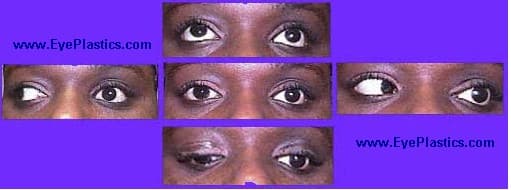
Good prosthetic movement is one of the most visible measures of a successful reconstruction. When a porous implant becomes vascularized and the extraocular muscles are attached — directly in enucleation, or through the preserved scleral shell in evisceration — the implant transmits movement to the overlying prosthesis. Motility is rarely identical to a natural eye, but a well-fitted prosthesis tracks convincingly in conversation and normal gaze.
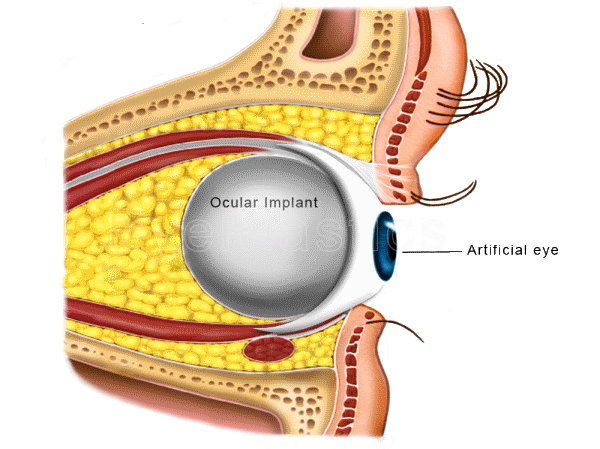
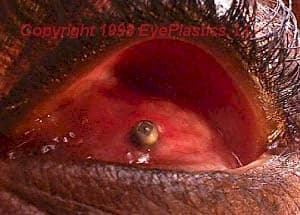
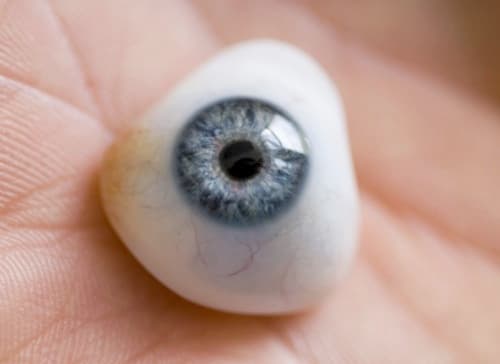
A certified ocularist designs, fits, and paints the custom prosthesis. After the socket heals (typically 4–6 weeks), the ocularist takes an impression of the socket and fabricates a prosthesis matched to the fellow eye in iris color, scleral hue, limbal detail, and vessel pattern. Multiple fitting visits refine comfort and alignment.
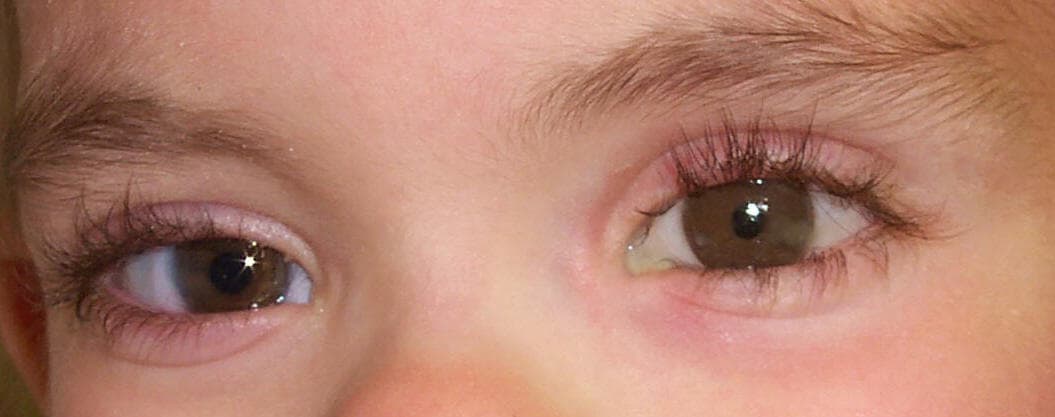
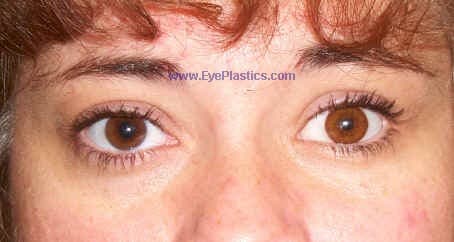
With a well-integrated implant and a custom prosthesis, most patients achieve a symmetric, natural appearance that is often difficult to distinguish from a natural eye in ordinary social interaction, though subtle differences—especially in movement—may remain.
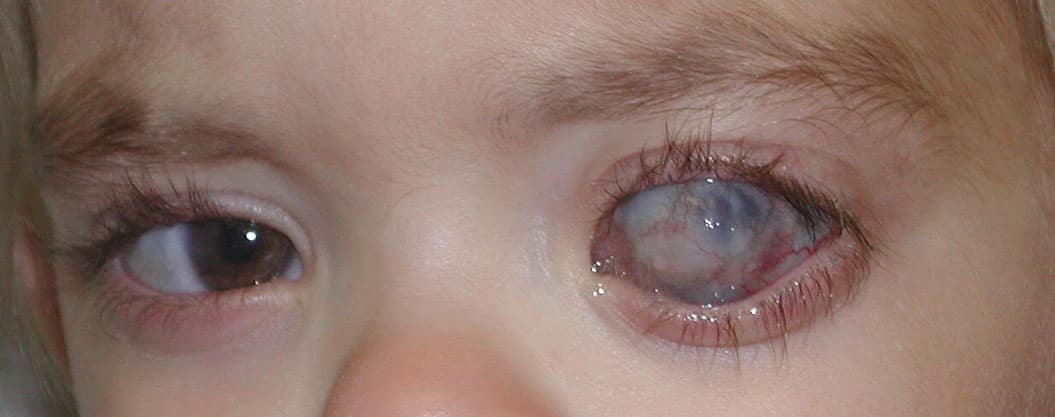
Clean the prosthesis with mild soap and water and keep the socket hygienic to prevent infection and irritation. Many patients leave the prosthesis in place for extended periods but should follow their ocularist’s guidance. Routine visits to the oculoplastic surgeon keep the socket healthy, and periodic ocularist visits (every 1–2 years) allow polishing and refitting as the socket naturally changes shape.
Connect with a board-certified oculoplastic surgeon who specializes in prosthetic results & motility.
Search the Directory →