
¿Qué es el Xantelasma?
Xantelasma — más precisamente xantelasma palpebrarum — son placas blandas, amarillas, planas o ligeramente elevadas formadas por células cargadas de colesterol que se acumulan en la piel delgada de los párpados. Aparecen con mayor frecuencia cerca de la esquina interna del párpado superior y pueden ser simétricas en ambos lados. El xantelasma es benigno: no es un tumor, no es contagioso y no se convierte en cáncer. Para muchas personas la preocupación es estética, pero las placas también pueden ser un indicador externo del metabolismo del colesterol y del riesgo cardiovascular.
Esta es una guía complementaria detallada de nuestra guía principal de Tumores y Lesiones de la Piel del Párpado. El xantelasma es el más común de los xantomas de los párpados y se extirpa frecuentemente junto con la blefaroplastia.
Causas y la Conexión con el Colesterol
El xantelasma se forma cuando macrófagos ricos en lípidos ("células espumosas") se acumulan en la dermis de la piel del párpado. Aproximadamente la mitad de las personas afectadas tienen una anormalidad de lípidos medible — colesterol LDL elevado, HDL bajo o una dislipidemia hereditaria — mientras que la otra mitad tiene lípidos sanguíneos normales. Independientemente de los números de colesterol, los estudios vinculan el xantelasma con un mayor riesgo a largo plazo de enfermedades cardíacas, por lo que las placas merecen ser tomadas en serio como una señal de salud. Un panel de lípidos en ayunas y una conversación con su médico de atención primaria son pasos iniciales sensatos.
Cómo se ve el Xantelasma
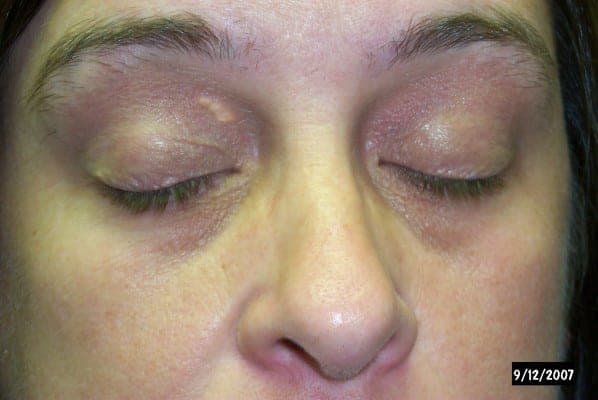
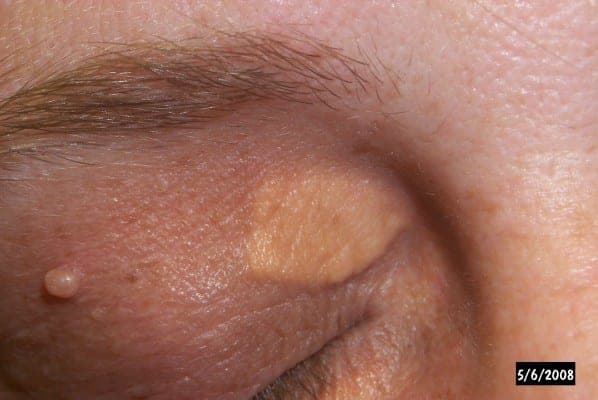
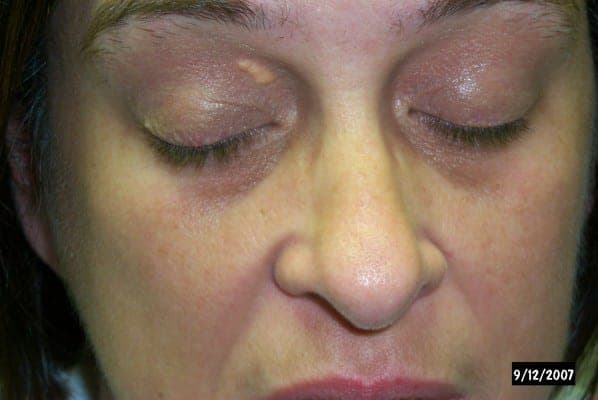
Las características típicas son placas de color amarillo cremoso, bien definidas, blandas que se sienten ligeramente aterciopeladas y se encuentran justo debajo de la superficie de la piel. Crecen lentamente durante meses o años, son indoloras y no se ulceran ni sangran — características que ayudan a distinguirlas de un tumor palpebral verdadero. Cuando una lesión amarillenta es firme, irregular, ulcerada o cambia rápidamente, debe evaluarse para descartar cáncer de piel.
Diagnóstico y Evaluación de Lípidos
El xantelasma suele ser un diagnóstico clínico — un cirujano oculoplástico puede reconocer las placas amarillas características en el examen. Debido a que existen lesiones similares (incluyendo lesiones sebáceas y, raramente, carcinoma sebáceo), cualquier lesión atípica puede ser biopsiada. Más allá del párpado, la evaluación incluye un perfil de lípidos en ayunas y, cuando está indicado, el cribado de diabetes y condiciones de tiroides o hígado que afecten los lípidos.
Tratamiento y Opciones de Extirpación
El xantelasma no requiere extirpación por razones de salud, pero muchos pacientes eligen tratamiento por razones estéticas. Las opciones incluyen:
- Escisión quirúrgica — extirpación directa, a menudo la opción más duradera para placas más gruesas; puede combinarse con blefaroplastia del párpado superior cuando hay exceso de piel.
- Ablación láser (CO2 o erbio:YAG) — vaporización precisa de placas delgadas y superficiales con buenos resultados cosméticos.
- Ácido tricloroacético (TCA) — tratamiento químico cuidadosamente aplicado para lesiones superficiales.
- Radiofrecuencia y crioterapia — opciones adicionales en casos seleccionados.
Debido a que la piel del párpado es delicada y está cerca del ojo, la selección de la técnica y el manejo meticuloso son importantes; el tratamiento demasiado agresivo puede causar cicatrices, cambio de pigmentación o malposición del párpado.
Recurrencia
El xantelasma recurre en aproximadamente el 25 a 40% de los casos, y el riesgo es mayor después del tratamiento repetido. La recurrencia es más probable cuando las lesiones son grandes, cuando están involucrados los cuatro párpados y cuando se deja sin tratar un trastorno lipídico subyacente. Controlar el colesterol y seleccionar el método de extirpación apropiado para el grosor de la lesión reducen la probabilidad de recurrencia.
Cuándo Consultar a un Cirujano Oculoplástico
Considere una evaluación especializada si las placas están agrandándose, son cosméticamente molestas, o si una lesión se ve atípica (firme, ulcerada o cambiando rápidamente). Un cirujano oculoplástico puede confirmar el diagnóstico, coordinar un análisis de lípidos y extirpar las placas con atención a la función y apariencia del párpado.
Consulte a un cirujano oculoplástico
Las lesiones del párpado se encuentran a milímetros del ojo, donde la extirpación y reconstrucción requieren cuidado especializado. Encuentre un cirujano oculoplástico entrenado por ASOPRS cerca de usted.